What Is Hydroponics (And Why It Matters)
Hydroponics is soilless farming — plants grow in water-based nutrient solutions instead of soil. Roots sit in water, nutrients dissolve directly, and growers control every variable: pH, EC, temperature, light.
The Advantages
- 80% less water usage vs soil farming (critical in water-scarce regions like Rajasthan)
- 3–4x higher yields per sq meter per year
- Year-round production — not dependent on monsoon or season
- Disease control — no soil-borne pathogens, cleaner produce
- Scalability — same techniques work for 500 sq meters or 5,000 sq meters
- Export-grade quality — consistent, pesticide-free produce commands premium pricing
The catch? Startup cost. You're building infrastructure, not just planting seeds.
Three Main System Types (And Their Costs)
Choose the crop first, then the system. Each system suits different crops, scales, and ROI horizons.
NFT — Nutrient Film Technique
A thin film of nutrient solution flows continuously through gutters where plants sit. Best for leafy greens (lettuce, spinach, herbs) and microgreens — high density, low cost to scale.
- Gutters & channels: ₹400–600/sqm
- Nutrient tank & circulation: ₹200–300/sqm
- Monitoring & controls: ₹150–250/sqm
- Installation labor: ₹100–150/sqm
- Total: ₹850–1,300/sqm · ₹85–130 lakhs for 1,000 sqm
- Setup: 4–8 weeks · ROI: 18–24 months payback start, ~4 years full
DWC — Deep Water Culture
Plant roots float in large tanks of aerated nutrient solution. Best for tomatoes, peppers, cucumbers — deeper roots, bigger plants, higher margins.
- Tanks & structure: ₹800–1,200/sqm
- Air pumps & aeration: ₹300–500/sqm
- Nutrient system: ₹250–350/sqm
- Monitoring & climate control: ₹300–500/sqm
- Installation labor: ₹200–300/sqm
- Total: ₹1,850–2,850/sqm · ₹1.85–2.85 Cr for 1,000 sqm
- Setup: 8–12 weeks · ROI: 3.5–4.5 years
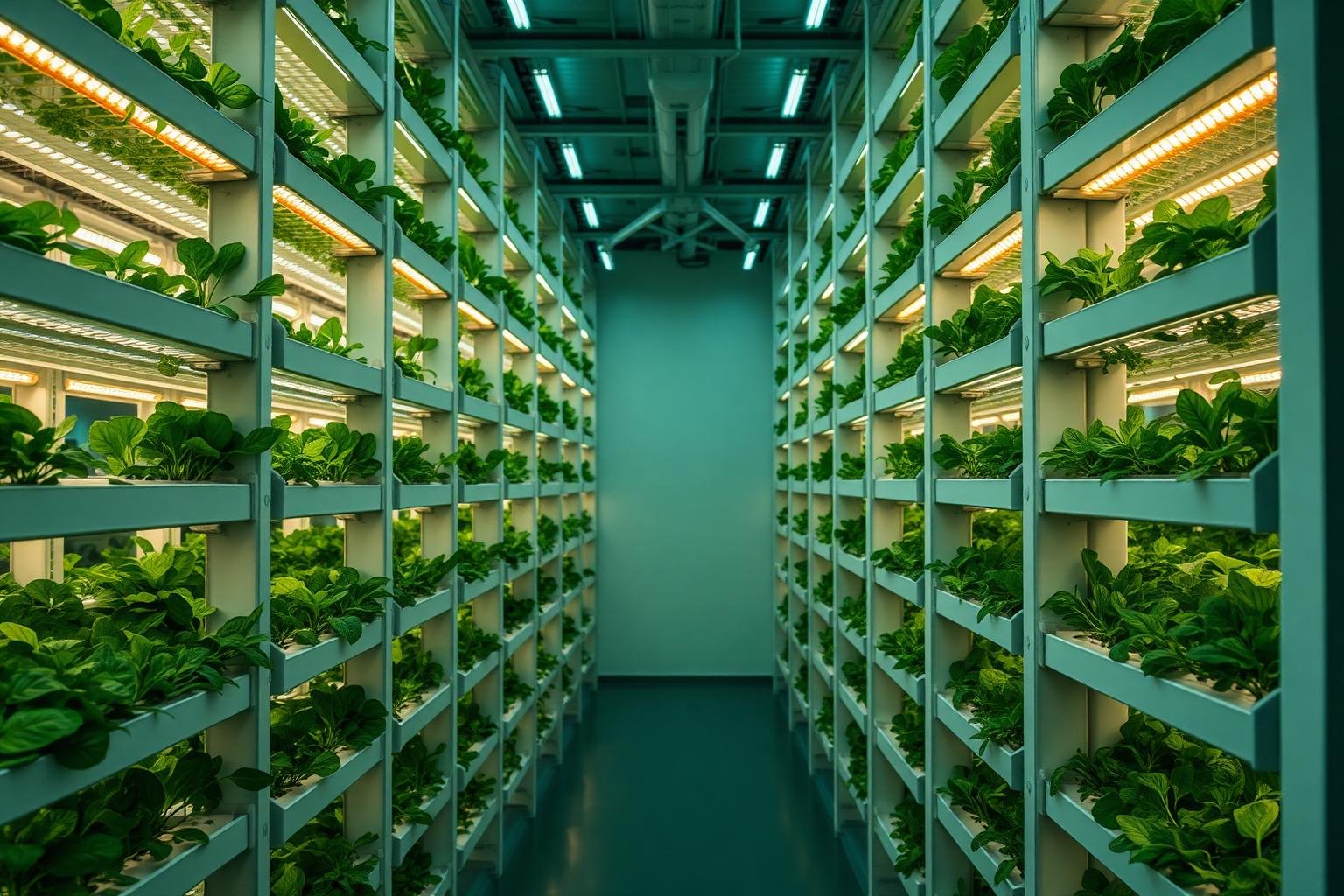
Vertical Hydroponic Systems
Plants stack in vertical towers. Maximum yield per square foot of floor space. Best for high-value crops (basil, lettuce, strawberries, microgreens) in land-constrained areas.
- Vertical towers/structure: ₹2,500–4,000/sqm floor
- Drip lines & irrigation: ₹400–600/sqm
- Nutrient system: ₹300–500/sqm
- LED grow lights: ₹1,500–2,500/sqm floor
- Climate control & monitoring: ₹400–700/sqm
- Installation & labor: ₹500–800/sqm
- Total: ₹5,600–9,100/sqm floor · ₹2.8–4.55 Cr for 500 sqm floor
- Setup: 10–14 weeks · ROI: 3–4 years
What Affects Your Cost
Six variables shift the per-sqm cost more than the system type itself.
1. Crop Selection
- Lettuce (NFT): ₹850–1,300/sqm
- Tomatoes (DWC): ₹1,850–2,850/sqm
- Premium herbs (Vertical): ₹5,600–9,100/sqm floor
2. Automation Level
- Manual (daily hand checks): ₹500–800/sqm
- Semi-automated (sensor alerts): ₹1,200–1,800/sqm
- Fully automated (auto-adjusting controllers): ₹2,000–3,500/sqm
- Full automation pays back in 2–3 years via labor savings
3. Location & Climate
- Uttarakhand (cool, high altitude): ₹200–400/sqm savings
- Rajasthan (hot, dry): ₹400–800/sqm premium for cooling, shade
- Delhi NCR: moderate cost, moderate complexity
4. Land Preparation
- Flat, level land: ₹100–200/sqm prep
- Sloped or rocky terrain: ₹500–1,200/sqm prep
5. Water Source & Quality
- Borewell on-site (with testing, treatment): ₹300–600/sqm
- Municipal water: ₹100–200/sqm
- Water treatment system (critical): ₹300–600/sqm
6. Electricity Access
- On-grid power: ₹200–400/sqm for wiring & panels
- Off-grid + solar backup: ₹1,500–2,500/sqm (zero ongoing electricity cost)
Real Project Examples
Names and exact locations redacted per client confidentiality. Numbers are real.
Project A — NFT Lettuce Farm, Manesar (Haryana)
- System: NFT · Area: 1,000 sqm · Setup: ₹1.05 Cr
- Crop: Iceberg lettuce · Automation: Semi-automated
- Timeline: 6 weeks · Annual yield: 80–100 tonnes
- Revenue: ₹26 lakhs/year · ROI: 48 months
Project B — DWC Tomato Farm, Jaipur (Rajasthan)
- System: DWC · Area: 1,500 sqm · Setup: ₹3.3 Cr
- Crop: Cherry tomatoes for premium restaurants
- Automation: Fully automated (climate, nutrients, irrigation)
- Timeline: 10 weeks · Annual yield: 200–240 tonnes
- Revenue: ₹65–80 lakhs/year · ROI: 42–50 months
- Automation investment paid back in 2 years via labor savings
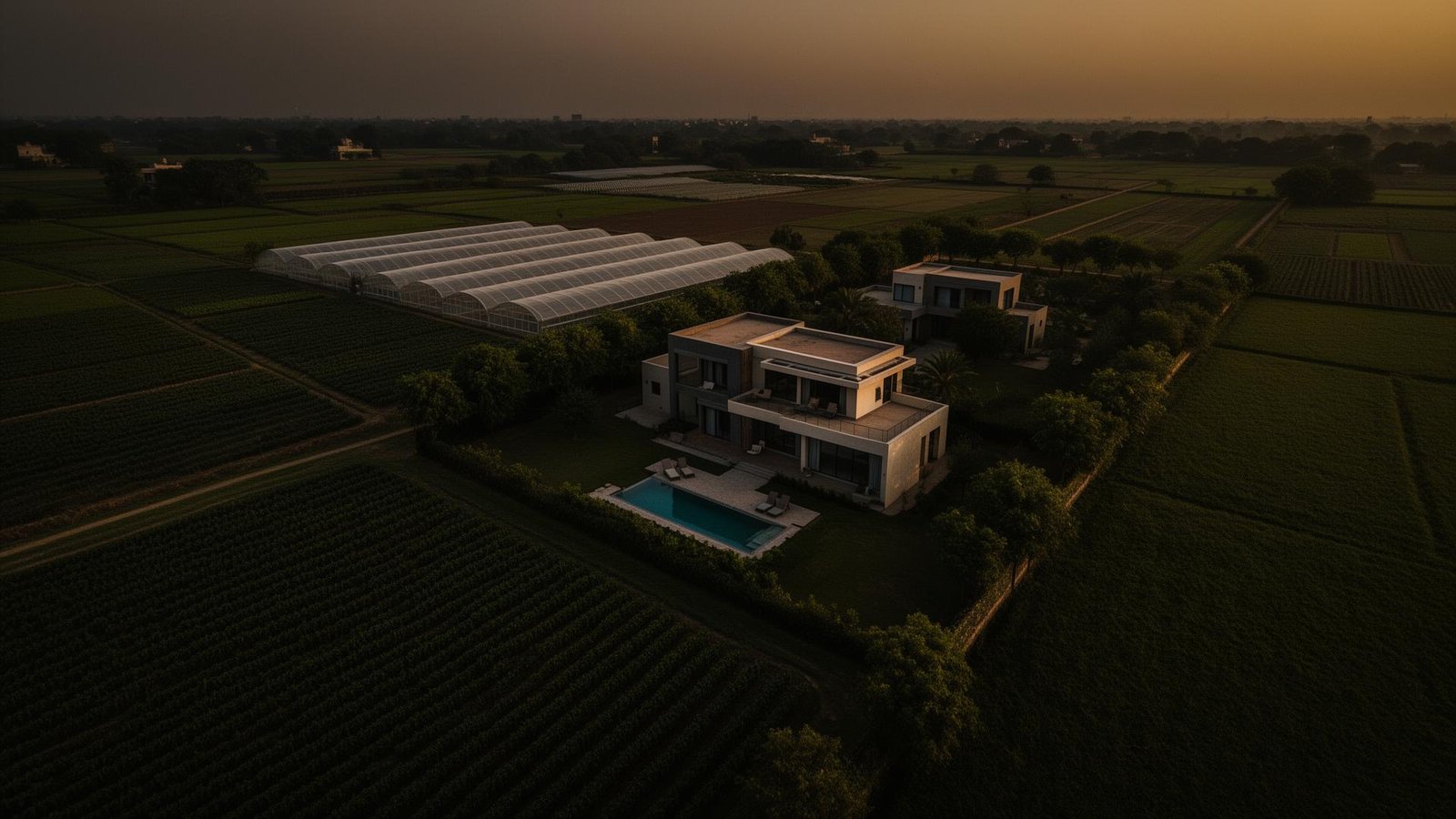
Project C — Vertical Herb Farm, Gurgaon (Farmhouse-integrated)
- System: Vertical towers · Floor: 400 sqm · Growing area: 1,600+ sqm (4 levels)
- Setup: ₹2.8 Cr · Crop: Premium basil, cilantro, microgreens
- Automation: Fully automated with climate control
- Timeline: 12 weeks · Annual yield: 250–300 tonnes
- Revenue: ₹95–120 lakhs/year (export quality)
- ROI: 36–42 months · Bonus: organic produce for farmhouse restaurant/events
Hidden Costs (Things People Forget)
Annual operating costs for a 1,000 sqm farm typically land at ₹50–85 lakhs/year. Plan for these line items from day one.
- Nutrients: ₹2–4 lakhs/year for 1,000 sqm
- Electricity: ₹30–50 lakhs/year for fully automated with grow lights (solar offsets 60–80%)
- Labor: 3–5 full-time staff · ₹15–25 lakhs/year even on automated farms
- Pest management (neem sprays, beneficial insects): ₹2–5 lakhs/year
- Maintenance & repairs (pumps, drip lines, sensors): ₹3–6 lakhs/year
- Organic certification: ₹1–2 lakhs/year
Profitability — Can You Actually Make Money?
Yes. But the math depends on crop choice and automation.
High-margin scenario
Vertical farm, premium basil, automated, export ready. ₹3.5 Cr setup → ₹100+ lakhs revenue → 36–42 month ROI.
Moderate-margin scenario
DWC tomatoes, semi-automated, wholesale to restaurants. ₹2.2 Cr setup → ₹60 lakhs revenue → 48–54 month ROI.
Low-margin scenario
NFT leafy greens, manual, wholesale to market. ₹1.0 Cr setup → ₹25 lakhs revenue → 60+ month ROI.
The rule: high-value crops (herbs, strawberries, microgreens) deliver fast ROI at small scale. Commodity crops (lettuce, tomatoes) need scale to be profitable.
Timeline — From Land to First Harvest
Total: 20–24 weeks from bare land to first commercial harvest.
- Weeks 1–2: Site assessment, soil & water testing, system design
- Weeks 3–4: Equipment procurement (some items ship in 4–6 weeks)
- Weeks 5–8: Civil works — levelling, foundation, electrical
- Weeks 9–12: System installation, nutrient tanks, grow lights
- Weeks 13–14: Testing, calibration, initial nutrient balance
- Weeks 15–16: First seedlings planted
- Weeks 20–24: First harvest (lettuce 4–5 weeks, tomatoes 8–10 weeks)
- Rush (16–18 weeks): 8–12% premium, more defects
- Slow (28–32 weeks): 5–8% saving, but delays revenue start
DIY vs Professional Build
The structure of the build changes both your effective cost and your operational risk.
DIY (Partial or Full)
- Cost: 30–40% lower · Timeline: 50–100% longer
- Risk: high (system failures, nutrient imbalances, equipment damage)
- Steep learning curve, frequent troubleshooting
- Best for: hobbyists with technical background
Professional Design-Build (like Koncept)
- Full price as quoted · Timeline: guaranteed 20–24 weeks
- Low risk: professional design, testing, warranties
- Turnkey handover with documentation, training, support plan
- Best for: investors wanting predictable outcomes
Where Hydroponics Fits in Your Luxury Farmhouse
Hydroponics integrated with a luxury farmhouse is a competitive differentiator — not a cost add-on.
- Year-round produce for restaurants/events
- Unique selling point for high-end rental
- Secondary revenue from farm-to-table experiences and agritourism
- Appeals to environmentally conscious buyers
- Increases property value and operational margins
The synergy: a ₹2 Cr farmhouse with a ₹60 lakh integrated hydroponic system becomes a ₹2.5 Cr+ asset (25% value premium) while generating ₹12–18 lakhs/year additional farm revenue.
Interested in building a luxury farmhouse with integrated agriculture? Explore our complete farmhouse design and construction services — we handle concept, architecture, construction, and working farm infrastructure end-to-end.
Choosing Your System
Three questions decide the system you should build.
What do you want to grow?
- Leafy greens, herbs, microgreens → NFT
- Tomatoes, peppers, cucumbers → DWC
- Maximum yield on small land → Vertical
- Integrated farmhouse produce → Hybrid (50% NFT lettuce + 50% DWC tomato)
What's your ROI timeline?
- 3–4 years acceptable → choose by crop, optimise for yield
- Under 3 years required → high-margin crops, full automation, export quality
What's your labor situation?
- Skilled farm labor available → semi-automated, save capital
- Limited labor → fully automated, invest in controls